
REMAN ROAD
FORGE A SUSTAINABLE INDUSTRIAL CIRCLE THROUGH STANDARDIZED GLOBAL REMANUFACTURING
We redefine asset regeneration and unlock infinite value for industrial equipment lifecycle.
WHAT DEFINES GENUINE REMANUFACTURING?
Many buyers confuse industrial remanufacturing with simple overhaul or cosmetic refurbishment. Remanufacturing follows a formal, standardized workflow to restore used heavy vehicles to defined performance specifications, creating assets with consistent quality and verifiable records.
Core Definition of Industrial Remanufacturing
- Industrial remanufacturing is a systematic, industrial-scale regeneration process for end-of-use heavy-duty vehicles.
- The base vehicle undergoes full disassembly, component inspection, repair or replacement, reassembly and multi-stage functional testing.
- The finished vehicle must meet published performance benchmarks, not merely run-able condition.
- It is not a casual repair job or surface repainting.
Core Criteria That Define Qualified Remanufacturing
- Complete teardown: The whole vehicle is fully disassembled, not only partial component stripping.
- Component screening: Every part is inspected by measurable standards. Worn or defective parts are replaced or regenerated.
- Standardised reassembly: Reassembly follows unified assembly specifications and torque requirements.
- Mandatory performance testing: Finished vehicles pass load, braking and system tests before delivery.
- Traceable documentation: Full process records are retained for audit and customer review.
Clear Distinction from Refurbishment & Ordinary Repair
- Repair: Fixes only broken parts to restore basic operation, no full disassembly or standardised testing.
- Refurbishment: Mostly cosmetic work, cleaning and repainting, with limited check of core assemblies.
- Remanufacturing: Full industrial rebuild with quantifiable performance targets and complete traceability.
The Fundamental Purpose of Remanufacturing
- Industrial remanufacturing aims to reset the service life cycle of heavy-duty vehicles through standardized industrial processes.
- Instead of merely patching worn assets to squeeze out residual usage time, remanufacturing rebuilds core assemblies to defined factory-equivalent performance benchmarks.
- The finished vehicle achieves operating performance, reliability and service specifications comparable to new units.
WHY CHOOSE REMAN TRACTOR TRUCK?
Fleet operators continuously seek balanced solutions between capital expenditure, operational reliability and sustainability. Standard industrial remanufacturing delivers tangible benefits that neither brand-new trucks nor ordinary second-hand vehicles can fully match.
Optimised Upfront Capital Investment
- Certified reman tractor head require far lower initial purchasing budget compared to brand-new heavy vehicles.
- Fleets can expand fleet size or replace ageing assets without large one-time capital outlay.
- This frees cash flow for site operation, spare part inventory and other critical business expenditure, which is especially valuable for mining and construction projects with tight budget schedules.
Predictable Total Cost of Ownership (TCO)
- Unlike random used trucks with unknown hidden defects, standard reman assets go through systematic disassembly, component inspection and performance testing.
- With complete traceable documentation, fleet teams can forecast maintenance cycles and control unexpected breakdown costs.
- Over the full service period, reman trucks often achieve lower total operating cost than cheap refurbished units.
Proven & Restored Performance
- Industrial remanufacturing restores core assemblies to defined performance benchmarks, not just cosmetic repairs.
- Key assemblies including engine, gearbox and axles are inspected, regenerated or replaced following unified standards.
- When properly maintained, certified reman trucks deliver power, load capacity and reliability close to new vehicles.
Strong Sustainability & Circular Economy Value
- Remanufacturing preserves usable metal structures and core components, cutting raw material consumption and carbon emissions generated in new vehicle manufacturing.
- It reduces industrial waste and extends the service life of heavy-duty assets.
- For fleets with ESG and carbon reduction targets, reman vehicles are a practical way to lower the carbon footprint of your fleet.
Transparent & Traceable Asset Records
- Each certified reman truck comes with full records: base vehicle screening logs, component inspection reports, replacement lists and final performance test results.
- Buyers can verify every major work step. This eliminates the information gap common in the second-hand truck market, helping fleets avoid vehicles with undisclosed accident damage.
Flexible Asset Strategy
- Reman trucks support flexible fleet planning. Fleets can deploy reman units for heavy-duty construction or mining tasks, while reserving brand-new trucks for high-priority routes.
- Certified reman trucks also maintain better residual value than uncertified used trucks when you rotate or resell vehicles later in the lifecycle.
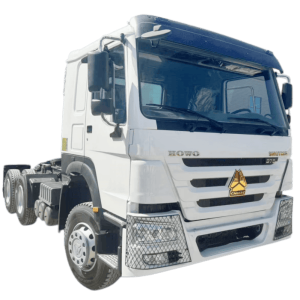
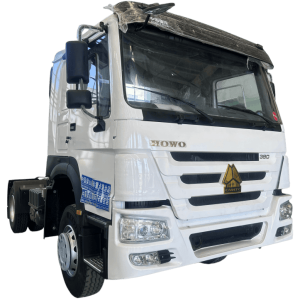
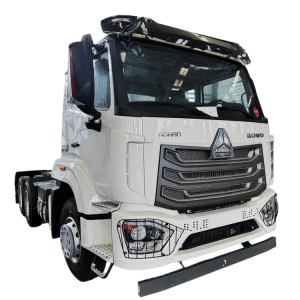
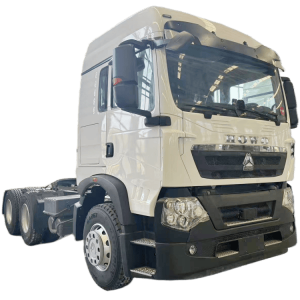
HOT SALE REMAN TRACTOR TRUCK
REAMN ROAD popular reman tractor trucks deliver near-new performance with controlled upfront investment, ideal for fleets seeking cost-effective heavy haul solutions.
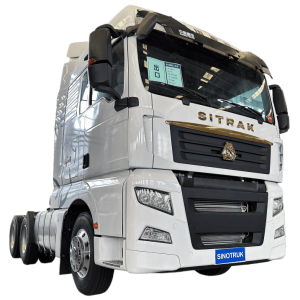
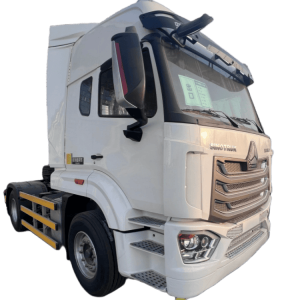
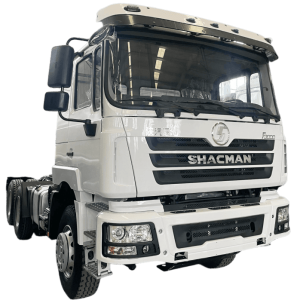
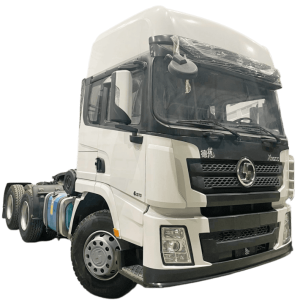
CORE DIFFERENCE: REMAN ROAD REMANUFACTURING VS ORDINARY REFURBISHMENT
Most second-hand trucks on the market only adopt simple cosmetic refurbishment, which cannot eliminate internal hidden failures. REMAN ROAD industrial tractor truck remanufacturing is a systematic technical regeneration project with essential differences in process, quality, risk and full-lifecycle cost.
Process Dimension: Systematic Regeneration vs Partial Cosmetic Repair
- Ordinary refurbishment only focuses on surface cleaning, painting and simple fault repair, retaining original aging internal components and metal fatigue.
- REMAN ROAD remanufacturing realizes full vehicle disassembly, full component detection and targeted renewal, fundamentally solving internal wear problems.
Quality Dimension: Traceable Standardization vs Uncontrolled Randomness
- Refurbished trucks have no unified standards, no test data and no quality records, and vehicle quality depends entirely on manual experience.
- REMAN ROAD forms unified industrial remanufacturing standards, all processes are recorded, all performance data is verifiable, and vehicle quality is stable and consistent in batches.
Risk Dimension: Zero Hidden Danger vs Long-Term Uncertain Failure
- Refurbished vehicles are prone to sudden breakdowns such as power attenuation, brake failure and oil leakage after short-term use, bringing huge downtime losses.
- Reman tractor truck eliminate early failure risks through bench testing and road calibration, with low long-term failure rate and high operational safety.
Full-Lifecycle Cost Dimension: Low TCO vs Low Price & High Consumption
- Refurbished trucks have low upfront purchase cost but high later maintenance cost, frequent downtime and fast asset depreciation.
- REMAN ROAD reman tractor head balance initial investment and long-term operation, with stable depreciation, predictable maintenance and significantly reduced comprehensive fleet TCO.
Asset Value Dimension: Circular Certified Assets vs Scrapped Second-Hand Goods
- Refurbished trucks belong to simple second-hand transactions with no asset value preservation ability.
- REMAN ROAD certified reman tractor head have complete industrial regeneration attributes, conform to circular economy standards, have higher residual value and more flexible asset turnover ability.
ESG & Compliance Dimension: Certified Circular Assets vs Unregulated Renovated Vehicles
- Refurbished vehicles lack standardized production records and official compliance certification, failing to meet modern fleet ESG assessment, green procurement and international bidding standards.
- REMAN ROAD industrial remanufacturing follows standardized circular economy workflows with complete material recycling, waste disposal and process traceability systems.
REMAN ROAD: BRAND POSITIONING, CORE STANDARDS & DEVELOPMENT VISION
REMAN ROAD take remanufacturing technology, standardized process system and quality control as the core, and heavy-duty equipment regeneration as the landing carrier, committed to solving the long-standing quality chaos and cost risks in the global engineering equipment renewal market.
Accurate Brand Positioning
- REMAN ROAD is a standard‑oriented industrial remanufacturing enterprise, not a vehicle sales dealer or equipment refurbishment workshop.
- Our strength lies in developing & rolling out measurable OEM-aligned reman benchmarks, quality standards and full-lifecycle asset rules.
- We create unified evaluation metrics for the fragmented heavy equipment reman sector, shifting the industry away from cosmetic refurbishment.
- With transparent, repeatable reman standards, we help global buyer source qualified regenerated assets and unlock green circular asset value.
Core Brand Principles
- Standardization First, Reject Fake Reman: Adopt OEM technical standards as the sole guideline, discard casual renovation, and guarantee near-new performance for every regenerated unit.
- Technology-Driven Regeneration: Use professional disassembly, cleaning, fatigue removal, precision repair and calibration to restore core performance, instead of simple part swapping.
- Full Transparent Quality Traceability: Archive full-process records for all reman projects to deliver verifiable restoration and eliminate information gaps in used equipment trade.
- Customer Value-Centric: Cut fleet full-lifecycle costs, remove operational safety risks and boost asset returns, delivering stable, cost-effective reman assets.
Brand Vision & Mission
- Mission: Standardize global industrial equipment remanufacturing, delivering low-cost, low-risk, high-value circular asset solutions for worldwide buyers.
- Vision: Become a global benchmark for standardized industrial remanufacturing. Drive the heavy equipment reman industry from rough renovation to standardized technical regeneration, and lead the global green circular equipment economy.
- Core Competitive Advantage: Our standardized reman system forms a closed loop covering vehicle screening, production, performance testing and after-sales support. Clients obtain OEM-grade equipment at reasonable cost, achieving cost reduction, risk mitigation and efficiency gains.